A seller in a Back Bay building does everything right this September. She pays her condo fee on time every month. She requests her 6(d) certificate two weeks before closing, the way Massachusetts closing attorneys have told sellers to do for decades. The trustees sign it. It states, in the language required by Massachusetts General Laws Chapter 183A, that she owes nothing. Her attorney records it at the Registry of Deeds. By every rule she has ever heard about, the unit is clear to sell.
Then the buyer's lender kicks the file back. Not because of anything she owes. Because of a reserve study the building commissioned in 2021, before anyone in the building had heard of Fannie Mae's new review standards.
That gap between a clean seller and a lendable building is the thing worth understanding if you are buying or selling a condo in Boston this fall. It is not hypothetical. It is the direct result of rule changes that took effect this summer and are still rolling out into January.
Two Different Gates, and Only One of Them Is About the Seller
Section 6(d) of Chapter 183A does one job: it confirms what a specific unit owner owes the association as of a given date. If the certificate comes back clean, the association's lien on that unit is discharged, and the unit can transfer without the buyer inheriting the seller's debt. That protection matters in Massachusetts because, as Pulgini & Norton explain, the state gives condo associations a limited priority lien, sometimes called a super-lien, that lets up to six months of unpaid common expenses jump ahead of a buyer's first mortgage. A clean 6(d) is what keeps that six-month exposure from following the sale.
What the certificate does not do is say anything about the building. It does not speak to the association's reserve balance, any special assessment the board has discussed but not yet voted on, or whether the property qualifies for a conventional mortgage at all. Those questions live in a completely separate review, one that runs on the lender's side and checks the health of the whole condominium project, not just the seller's account.
Until this past August, most Boston buyers never noticed that second review existed, because it rarely got in the way. That changed on August 3, 2026.
What Actually Changed, and Why the 15% Number Isn't the Real Deadline
On March 18, 2026, Fannie Mae and Freddie Mac issued coordinated updates to their condo lending standards, Fannie's Lender Letter LL-2026-03 and Freddie's matching Bulletin 2026-C. The headline most people repeat is that the minimum reserve contribution is rising from 10% to 15% of an association's annual assessment income. That change is real, but it does not take effect until January 4, 2027, and associations with a current, fully funded reserve study can qualify for an exception even then.
The change that is already affecting Boston closings took effect months earlier. As of August 3, 2026, lenders can no longer use the streamlined Limited Review process for any established condo project with more than 10 units. Every loan application dated on or after that day requires a Full Review: a complete look at the association's budget, reserve funding, insurance, delinquency rate, litigation history, and any special assessments, current or pending. The same rule retired the practice of letting a reserve study rely on "baseline" funding, the option that lets a reserve balance drift toward zero between big-ticket repairs. If an association wants to lean on its reserve study to justify sitting below the funding floor, that study now has to show the highest recommended funding tier, and it has to have been completed or updated within the last three years.
That is the part catching people off guard this fall. A building does not need to hit 15% funding to run into trouble in September 2026. It just needs a reserve study old enough, or funded conservatively enough, to fail a review process the building never used to go through.
Why Boston's Older Buildings Carry More of This Risk
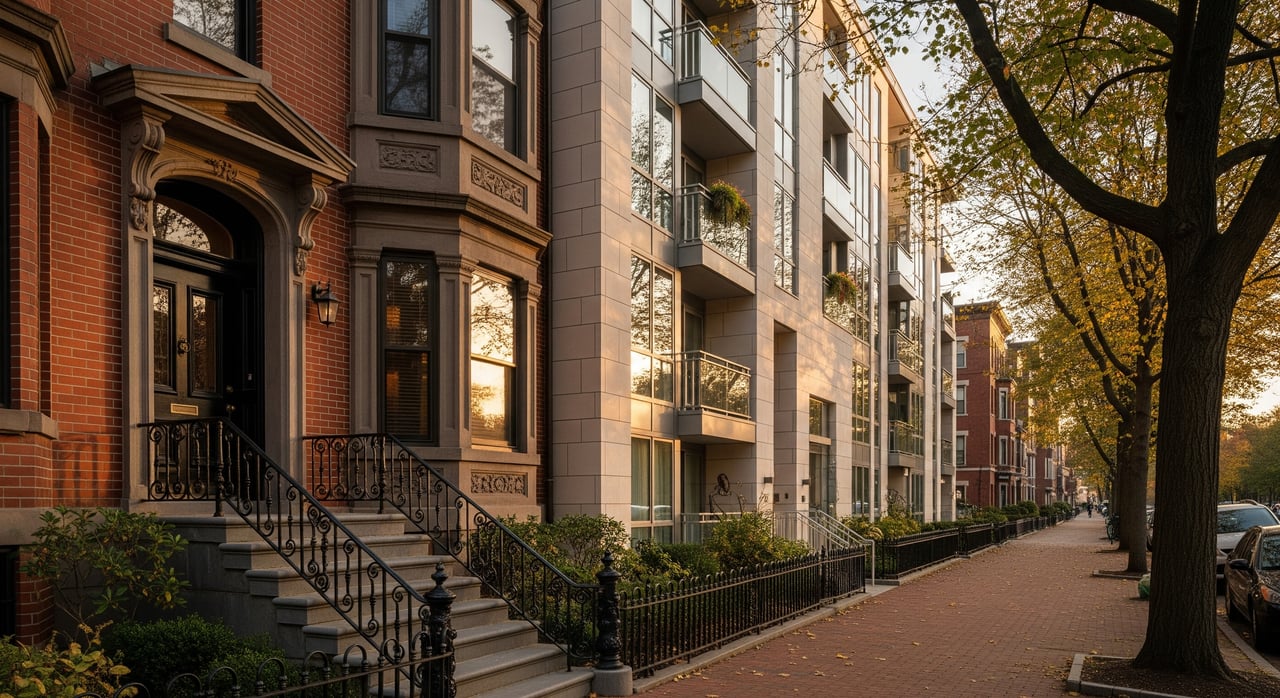
Boston's condo stock skews toward exactly the kind of building this review was built to catch. A meaningful share of the city's inventory sits in pre-war conversions across Back Bay and the South End, brownstones and rowhouses turned into a handful of units decades ago, often governed by small, self-managed associations rather than professional management companies. Those are the associations least likely to have commissioned a reserve study in the last three years, and least likely to have a clear, documented process for producing one on short notice when a lender asks.
Insurance premiums for that same stock have been climbing for years, driven by aging plumbing, older roofs, and elevated replacement costs, and HO-6 rates in Back Bay and the South End already run higher than in newer Seaport buildings for that reason. Many boards responded by raising their master policy's deductible as a percentage of coverage rather than absorbing the premium increase. That was a reasonable trade-off under the old rules. Under the new ones, it is not. According to CoverWatch, effective July 1, 2026, the per-unit deductible on a master property policy is capped at a flat $50,000, regardless of the percentage the board negotiated. Picture a 90-unit building insured for $24 million with a 5% deductible, a common structure before this year. Under the old math that deductible ran to $1.2 million. Under the new cap, anything over $50,000 fails the review outright, and the whole project turns non-warrantable until the board restructures the policy.
There is a smaller silver lining buried in the same rule change. According to GoverningDocs, buildings of 10 units or fewer, provided they are not part of a larger master association or phased development, now qualify for an expanded Waiver of Project Review, which means less documentation, not more. If you are looking at a small standalone building, this cuts the other way. It is the mid-size and larger Boston associations, the ones just past that 10-unit line, where Full Review is now mandatory no matter how large a down payment the buyer brings.
What to Ask For Before You Write an Offer
None of this is a reason to avoid a building. It is a reason to ask for the paperwork earlier than buyers used to. Before you write an offer on a Boston condo this fall, request:
- The association's most recent reserve study, and the date it was completed or last updated. Anything older than three years, or funded at a baseline level, is a flag under the current rules, not just the ones coming in January.
- The master insurance policy's declarations page, with the per-unit deductible stated in dollars, not as a percentage of coverage.
- The current delinquency rate among unit owners and whether any special assessment has been discussed at a recent board meeting, even if it has not been formally levied.
- The annual budget's reserve line item as a percentage of assessment income, so you know how far the association sits from both the current standard and the one taking effect in January.
A clean 6(d) certificate should still be part of every closing checklist. It just answers a narrower question than most buyers assume it does. Reading a reserve study and an insurance declarations page the way you would read a construction budget, checking what is funded, what is deferred, and what assumption is doing the heavy lifting, tells you whether the building behind that certificate can actually get your loan approved.
A Few Questions Worth Asking Before You Close
Does a clean 6(d) certificate mean the building is warrantable? No. The 6(d) confirms the seller's account is current as of its date. It says nothing about the association's reserve funding, insurance structure, or eligibility for a Fannie Mae or Freddie Mac loan, which is a separate, building-wide review.
My building has fewer than 10 units. Does any of this apply to me? The Full Review requirement targets projects with more than 10 units. Smaller, standalone buildings not tied to a larger master association may actually see less paperwork under the expanded Waiver of Project Review, provided they meet the standard insurance and eligibility requirements.
What if the association's reserve study is more than three years old? As of August 3, 2026, a lender relying on a reserve study to justify reserve funding below the standard floor must confirm the study is current within the last three years and reflects the highest recommended funding tier. An outdated study can push the building into a Full Review finding of insufficient reserves, independent of the January 2027 change to the funding percentage itself.
Reading a reserve study and a master insurance policy the way a construction finance background teaches you to read a project budget is exactly the kind of work that keeps a Boston condo closing from stalling in month two. If you are weighing an offer, or wondering whether your own building's paperwork would hold up under a Full Review, Anne M. Kennedy can walk through the documents with you before you are already under contract.
This article is general information, not legal, tax or financial advice. Consult a qualified professional about your situation.